Kicking off with dolibarr erp, this powerful tool is revolutionizing the way businesses manage resources and streamline operations. Dolibarr ERP offers a suite of core functionalities designed for small to medium-sized enterprises, making it a prime choice for users seeking efficient management solutions. From its user-friendly interface to its customizable modules, Dolibarr is tailored to meet the unique needs of various industries.
This guide delves into the essential features and advantages of Dolibarr ERP, providing insights on installation, configuration, and user experience. With a focus on practical applications and best practices, we aim to equip you with the knowledge needed to harness the full potential of this innovative software.
Overview of Dolibarr ERP
Dolibarr ERP is an open-source Enterprise Resource Planning (ERP) and Customer Relationship Management (CRM) software designed to manage small and medium enterprises efficiently. Built on a modular framework, it provides users with a wide range of functionalities to streamline operations and enhance productivity.
The core functionalities of Dolibarr ERP encompass a variety of business processes. It offers modules for invoicing, inventory management, project management, accounting, and human resources, among others. Each module operates seamlessly within a unified interface, allowing users to customize their experience based on specific business needs. With its intuitive design, Dolibarr ensures that users can easily navigate through various functionalities without extensive training.
Targeted User Base
Dolibarr ERP primarily targets small to medium-sized enterprises (SMEs), freelancers, and non-profit organizations. The platform caters to users who require an effective yet affordable solution for managing their business operations without the complexities that often accompany larger ERP systems. Its modular structure is particularly beneficial for organizations looking to implement specific functionalities gradually.
Advantages of Using Dolibarr ERP
The use of Dolibarr ERP provides several advantages over traditional ERP systems. One key benefit is its cost-effectiveness, as it is open-source and can be downloaded and installed without licensing fees. Additionally, its modular architecture allows businesses to choose only the functionalities they need, thus reducing unnecessary costs associated with unused features.
The user-friendly interface of Dolibarr is another distinct advantage, promoting ease of use for individuals with varied technical backgrounds. Furthermore, Dolibarr ERP can be customized to fit unique business requirements, thanks to its open-source nature which allows for modifications and enhancements by developers.
Some of the notable advantages include:
- Affordability: As an open-source solution, Dolibarr eliminates high costs associated with licensing and proprietary software.
- Scalability: Businesses can start with basic modules and gradually add more functionalities as they grow.
- User-friendly Interface: The intuitive design ensures that users can manage tasks efficiently without extensive training.
- Customization: Developers can modify the software to tailor it to specific business needs, enabling unique business workflows.
- Active Community Support: Being open-source, Dolibarr benefits from a robust community that contributes to its ongoing development and support.
Installation and Configuration
Installing Dolibarr ERP can be achieved on various platforms, including web servers and local machines. This guide will walk you through the steps to ensure a successful installation while addressing essential configuration settings and common issues that may arise during the process.
Installation Steps on Various Platforms
Dolibarr ERP can be installed on different operating systems including Linux, Windows, and macOS. Below is a step-by-step guide for each platform.
Linux Installation
To install Dolibarr ERP on a Linux server, follow these essential steps:
1. Prerequisites: Ensure your server has Apache, MySQL (or MariaDB), and PHP installed. The recommended PHP version is at least 7.2.
2. Download: Get the latest version of Dolibarr from the official website.
3. Extract Files: Unzip the downloaded file into your web server root directory, typically `/var/www/html/`.
4. Database Setup: Create a new database using MySQL. This can be done via command line:
“`bash
mysql -u root -p
CREATE DATABASE dolibarr;
GRANT ALL PRIVILEGES ON dolibarr.* TO ‘user’@’localhost’ IDENTIFIED BY ‘password’;
FLUSH PRIVILEGES;
EXIT;
“`
5. Web Installation: Navigate to `http://your-server-ip/dolibarr/` and follow the on-screen instructions to complete the installation.
Windows Installation
For Windows users, the process is slightly modified as follows:
1. Prerequisites: Install XAMPP or WAMP, which includes Apache, MySQL, and PHP.
2. Download: Obtain the latest Dolibarr package.
3. File Extraction: Extract the contents into the `htdocs` folder (for XAMPP) or `www` folder (for WAMP).
4. Database Configuration: Use phpMyAdmin to create a database and user as shown in the Linux section.
5. Web Installation: Access the installer by navigating to `http://localhost/dolibarr/`.
macOS Installation
To install on macOS, users can rely on MAMP or similar stacks:
1. Install MAMP: Download and install MAMP, which comes bundled with Apache and MySQL.
2. Download Dolibarr: Get the latest version.
3. File Placement: Place the extracted files in the `htdocs` directory of MAMP.
4. Database Creation: Access phpMyAdmin via MAMP to create a database.
5. Access Installer: Open `http://localhost:8888/dolibarr/` to run the installation script.
Configuration Settings for Optimal Performance
After installation, proper configuration is crucial for ensuring Dolibarr ERP runs efficiently. The following settings should be adjusted:
– PHP Settings: Modify `php.ini` file to increase memory limits and execution time:
“`plaintext
memory_limit = 256M
max_execution_time = 300
“`
– Database Configuration: Optimize MySQL settings for better performance, such as:
“`plaintext
innodb_buffer_pool_size = 1G
“`
– URL Rewriting: Enable URL rewriting in Apache to allow clearer and more -friendly URLs. This can be done in the `.htaccess` file within the Dolibarr directory.
Common Issues and Solutions During Installation
While installing Dolibarr, users may encounter various common issues. Here are some frequent problems and their respective solutions:
– Database Connection Errors: This typically occurs due to incorrect database credentials. Double-check the username, password, and database name in the configuration file.
– Missing PHP Extensions: Ensure all required PHP extensions are enabled, particularly `mysqli`, `mbstring`, and `gd`. These can be enabled by editing the `php.ini` file.
– Permission Issues: Ensure that the web server has the appropriate permissions to access the Dolibarr directory. Use the following commands on Linux:
“`bash
chown -R www-data:www-data /var/www/html/dolibarr/
chmod -R 755 /var/www/html/dolibarr/
“`
“Configuring Dolibarr ERP properly is essential for leveraging its full capabilities and ensuring a smooth operational flow.”
Features and Modules
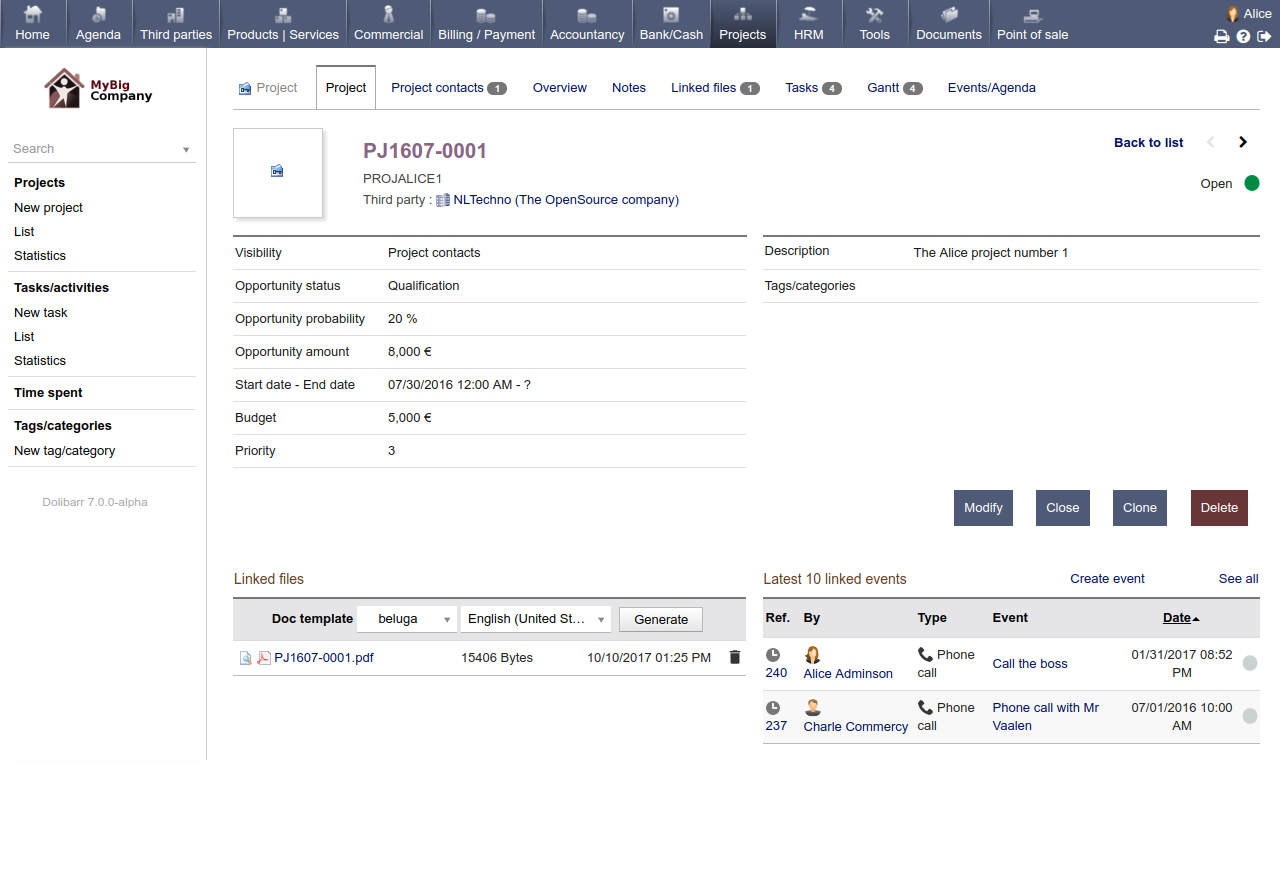
Dolibarr ERP is a versatile and modular software solution designed to cater to the varying needs of businesses. It incorporates a wide array of features and modules that facilitate comprehensive management of business processes. The modular architecture allows organizations to select and customize functionalities according to their specific requirements, enhancing efficiency and productivity.
A significant advantage of Dolibarr ERP is its flexibility, enabling businesses to tailor the system to fit their unique workflows. This customization can range from enabling or disabling certain features to creating bespoke modules that address particular business functions. Below are the key modules readily available in Dolibarr ERP and a glance at how they can be adapted to serve different business needs.
Key Modules Available in Dolibarr ERP
Dolibarr offers a robust set of modules that encompass essential business functions. The following are some of the pivotal modules that organizations can leverage:
- CRM: Manage customer relationships, track interactions, and overview sales opportunities.
- Billing: Generate invoices, manage payments, and automate billing processes.
- Project Management: Plan, execute, and oversee projects with task assignments and milestones.
- Inventory Management: Oversee stock levels, manage suppliers, and streamline inventory processes.
- Accounting: Handle financial transactions, ledgers, and financial reporting.
- Human Resources: Manage employee records, payroll, and recruitment processes.
- Point of Sale (POS): Facilitate sales transactions in physical retail environments.
- Website Management: Integrate online services and manage e-commerce operations.
Customization of Modules According to Business Needs
The ability to customize Dolibarr modules ensures that businesses can adapt the ERP system to their specific operational requirements. Users can enable or disable modules based on their relevance to the business processes. Furthermore, companies can implement custom modules tailored to unique workflows, significantly improving operational efficiency.
Customization can involve modifying existing modules or creating entirely new ones. For instance, a company focused on project management may choose to enhance the Project Management module with additional fields for tracking progress specific to their projects. Dolibarr’s open-source nature allows for extensive customization options, enabling organizations to develop features that align perfectly with their business models.
Comparison of Features Between Dolibarr and Other ERP Solutions
When analyzing the landscape of ERP solutions, it is essential to understand how Dolibarr stacks up against other contenders in terms of features and usability. Dolibarr is often favored for its simplicity and cost-effectiveness compared to many traditional ERP systems.
| Feature | Dolibarr ERP | Other ERP Solutions |
|---|---|---|
| Cost | Open-source, low-cost implementation | Often expensive with high licensing fees |
| Customization | Highly customizable, modular structure | Limited by vendor-specific features |
| User Interface | Simple and intuitive | Can be complex and overwhelming |
| Implementation Time | Quick setup with minimal training required | Can take months for full deployment |
“Dolibarr offers a flexible, user-friendly alternative to traditional ERP systems, making it an attractive choice for small to medium-sized enterprises.”
User Experience and Support
The user experience in Dolibarr ERP is designed to be intuitive and user-friendly, catering to a wide range of users from different backgrounds. The interface provides easy navigation, ensuring that even those with minimal technical skills can manage their tasks effectively. Additionally, numerous support resources are available to assist users in maximizing their use of the platform.
User Interface and Navigation, Dolibarr erp
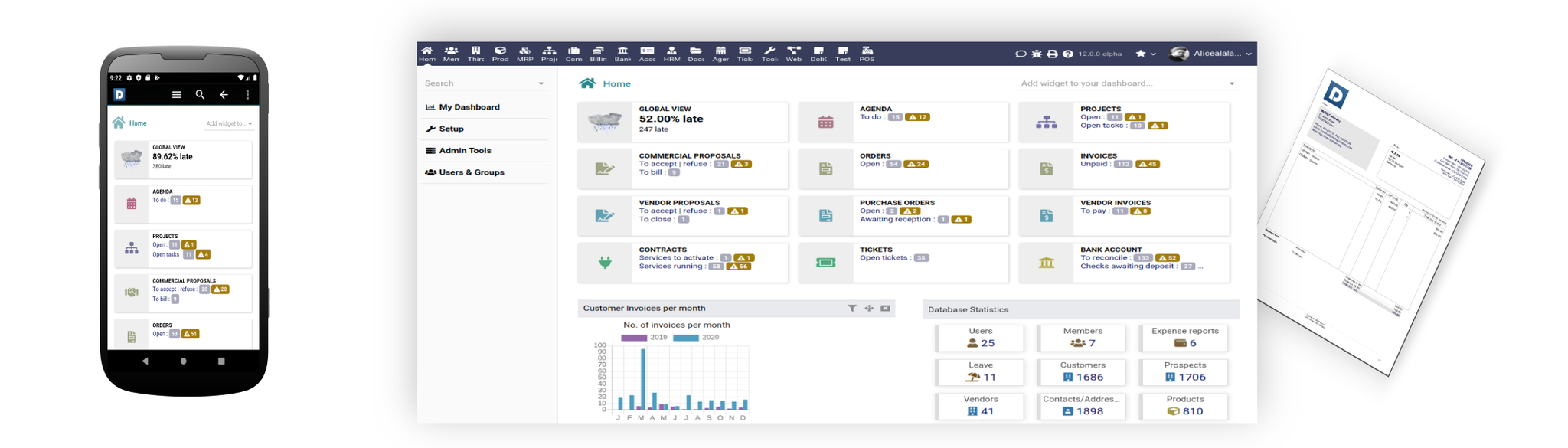
Dolibarr ERP features a clean and modern interface that prioritizes user accessibility. The main dashboard provides a consolidated view of key metrics and tasks, allowing users to gain insights at a glance. Navigation is streamlined, with a menu structure that categorizes modules clearly. Users can easily switch between different sections such as invoicing, customer management, and inventory, enhancing their efficiency in managing workflows. The customizable dashboard allows individuals to personalize their experience by adding widgets that reflect their priorities.
Available Support Resources
Users of Dolibarr ERP benefit from a variety of support resources that facilitate their understanding and usage of the software. These resources include:
- Documentation: Comprehensive manuals and guides are available on the official Dolibarr website, covering installation, features, and troubleshooting.
- Community Forums: An active user community provides a platform for discussions, sharing experiences, and resolving issues collaboratively.
- Video Tutorials: Numerous video tutorials are available online, visually demonstrating various functionalities for quick learning.
- Professional Support: For businesses requiring advanced assistance, professional support services are available, offering tailored guidance and solutions.
These resources ensure that users can seek help whenever needed, enhancing their overall experience with Dolibarr ERP.
Best Practices for Employee Training
To ensure that employees become proficient in using Dolibarr ERP, organizations should implement structured training programs. Effective training enhances productivity and reduces the likelihood of errors. Here are some best practices for training:
- Create a Structured Training Plan: Artikel the key areas to be covered, including essential features and frequently used modules.
- Utilize Hands-On Training: Encourage employees to engage directly with the software through practical exercises that reinforce learning.
- Incorporate Real-Life Scenarios: Use examples relevant to the organization’s operations to demonstrate how Dolibarr can solve specific problems.
- Foster a Supportive Environment: Create opportunities for employees to ask questions and share their experiences, thus enhancing peer learning.
- Encourage Continuous Learning: Offer refresher courses and updates on new features as Dolibarr ERP evolves.
Implementing these strategies can lead to a more efficient and confident workforce, maximizing the benefits of Dolibarr ERP.
FAQs
What is Dolibarr ERP?
Dolibarr ERP is an open-source software suite designed for managing business resources, including finance, sales, and inventory.
Can I customize Dolibarr ERP to fit my business?
Yes, Dolibarr ERP offers various modules that can be tailored to meet the specific needs of your organization.
Is Dolibarr ERP free to use?
Yes, Dolibarr ERP is free to download and use, although there may be costs associated with hosting or additional support services.
What platforms does Dolibarr ERP support?
Dolibarr ERP can be installed on various platforms, including Windows, macOS, and Linux, as well as web servers.
What kind of support is available for Dolibarr ERP users?
Support is available through forums, comprehensive documentation, and community resources dedicated to helping users.
When it comes to managing business operations efficiently, software sage x3 stands out as a robust solution. This software not only streamlines processes but also enhances productivity across various departments. Coupling it with a powerful sales tool like crm pipedrive can further optimize customer relationship management, enabling businesses to track leads and manage sales pipelines seamlessly.
Effective customer management is crucial for growth, and integrating crm pipedrive can significantly elevate your sales strategy. By leveraging its features, teams can enhance their outreach and maintain better relationships. Additionally, combining it with software sage x3 provides a comprehensive toolset for businesses, ensuring both operational efficiency and customer satisfaction are prioritized.